HILP Reference Library Development Workshop

HILP Reference Library Development Workshop

HILP Reference Library Development Workshop

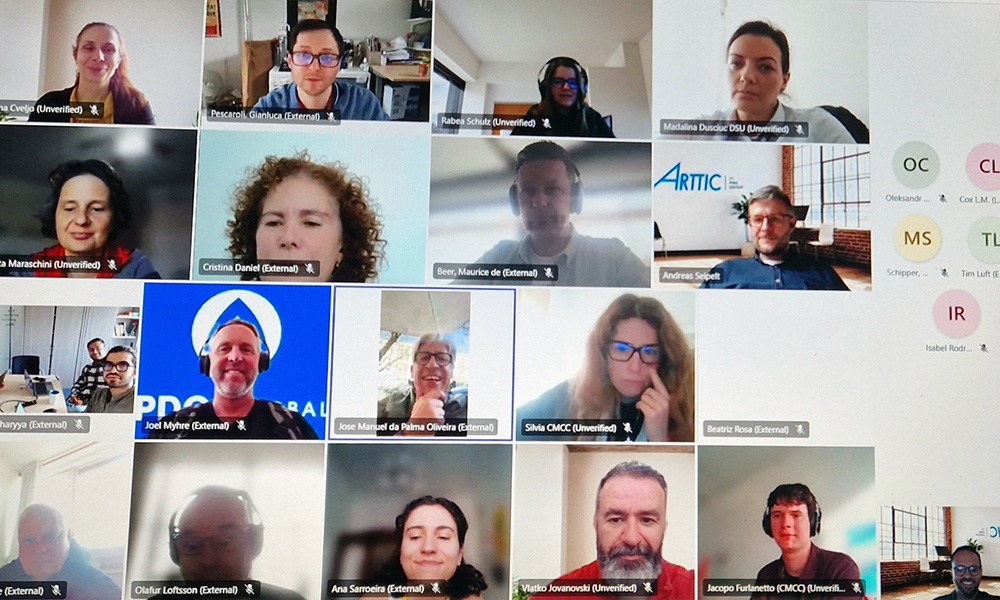
The HILP Reference Library Development Workshop held today was a tremendous success! Your enthusiasm and active participation made this event a great success. We are pleased to share that we have successfully achieved all the goals we set for this workshop.

Highlights from our Workshop:
  • Well-Received and Active Participation: We were delighted to see so many engaged and passionate experts join us, contributing their valuable insights
  • High Relevance: The topics discussed were clearly of significant importance to everyone involved, underscoring the critical nature of our collective work
  • Clear Scope and Objectives: We successfully outlined the scope and objectives of our project, setting the stage for future collaborations

A huge thank you to everyone who participated and shared their expertise. Your insights are invaluable as we work towards building a comprehensive reference library on historical High Impact Low Probability (HILP) disasters. Together, we are shaping a more resilient future.
1st General Assembly Meeting

1st General Assembly Meeting

1st General Assembly Meeting

The AGILE project held its 1st General Assembly (GA) meeting remotely on 19th March, six months after the project’s launch. The meeting brought together representatives from all 14 project partners, providing a key platform to review progress, discuss deliverables, and align on the next steps for the consortium.


Project Coordination and Management

  • Two deliverables (D7.1, D8.1) and one milestone (MS1) were achieved; four more deliverables (D1.1, D6.1, D7.2, D7.3) and two milestones (MS2, MS3) are due by April 2024.
  • All partners were reminded to identify and report potential project risks in SharePoint
  • Grant Agreement amendment: budget shifts, inclusion of Tohoku University as a consortium partner, and timeline corrections.

Conceptualising HILP as Concurrent, Cascading, and Systemic Events

  • D1.1 is nearing finalization; the working definition of HILP events was piloted within the consortium and refined through feedback.
  • Characteristics of “low probability” and “high impact” were defined and voted on as mandatory components for identifying HILP events.
  • Partners are requested to provide additional details on emergency management challenges for integration into D1.1
  • Quantitative analysis of probability and impact planned under Task 1.2.

Multi-Disciplinary HILP Reference Library

  • Develop an architecture and database of HILP events, including causes, triggers, and impacts.
  • A survey is planned for early May and a workshop for late June to gather insights on influencing factors.
  • Target groups to be defined by task leaders; ethics review required for survey deployment.
  • Focus on identifying factors that differentiate HILP from non-HILP events.

Risk and Resilience Stress-Test Methodology

  • Aligning methodologies with WP1 and WP2 to ensure integrated stakeholder feedback.
  • Refining tools and approaches for effective risk and resilience stress testing.

Scenario Co-Development and Stress Test Implementation

  • Collaborating with case study partners to develop realistic scenarios and implement stress tests.

Evidence-Based Planning, Capacity Building, and Risk Communication

  • Challenges include data availability, confidentiality, and lessons learned from past events.
  • Strengthening ties with regional authorities through case study partners for stress tests.

Dissemination, Communication, and Exploitation

  • Stakeholder database expansion through WP1 interviews and WP2 surveys.
  • Collaboration with case study partners will ensure effective outreach.
  • Website launched by Week 12; social media goals to be adjusted in the Grant Agreement amendment.
  • Ensure GDPR compliance for stakeholder contact data sharing.
AGILE Project Kick-Off Meeting

AGILE Project Kick-Off Meeting

AGILE Project Kick-Off Meeting

The AGILE project officially launched on 1st October 2023, with its Kick-Off Meeting held at Ca’ Foscari University of Venice, Italy. The event brought together representatives from the project’s 14 partners, including universities, research centers, NGOs, first responders, and local, regional, and national authorities.

AGILE (AGnostic risk management for high Impact Low probability Events) aims to enhance societal resilience to High Impact Low Probability (HILP) events by developing a comprehensive definition of HILP and creating practical tools and methodologies to address these risks.

The meeting agenda encompassed key project milestones, such as conceptualizing HILP events as concurrent, cascading, and systemic risks, building a multi-disciplinary HILP reference library, and introducing an innovative risk and resilience stress-testing methodology.

Highlights of the meeting included:
  • An introduction to consortium partners and detailed case studies
  • Scientific insights into socio-ecological systems and stakeholder mapping
  • An informative presentation by the European Commission Project Officer
  • In-depth discussions on dissemination, communication, and exploitation strategies

Collaborative group sessions focused on refining definitions, scenarios, and methodologies while establishing governance structures and planning for the first project year. With clear next steps identified, AGILE is set to deliver impactful solutions for managing HILP events and strengthening disaster risk management capacities.