Tier 3 – Advanced quantitative analysis

Objective

This tier uses advanced modelling tools to explore risk dynamics and test possible interventions, in order to understand how complex systems behave under natural, climate-related, and human-induced hazards. It focuses on simulating cascading failures across interconnected domains — such as infrastructure, environment, and socio-economic systems.
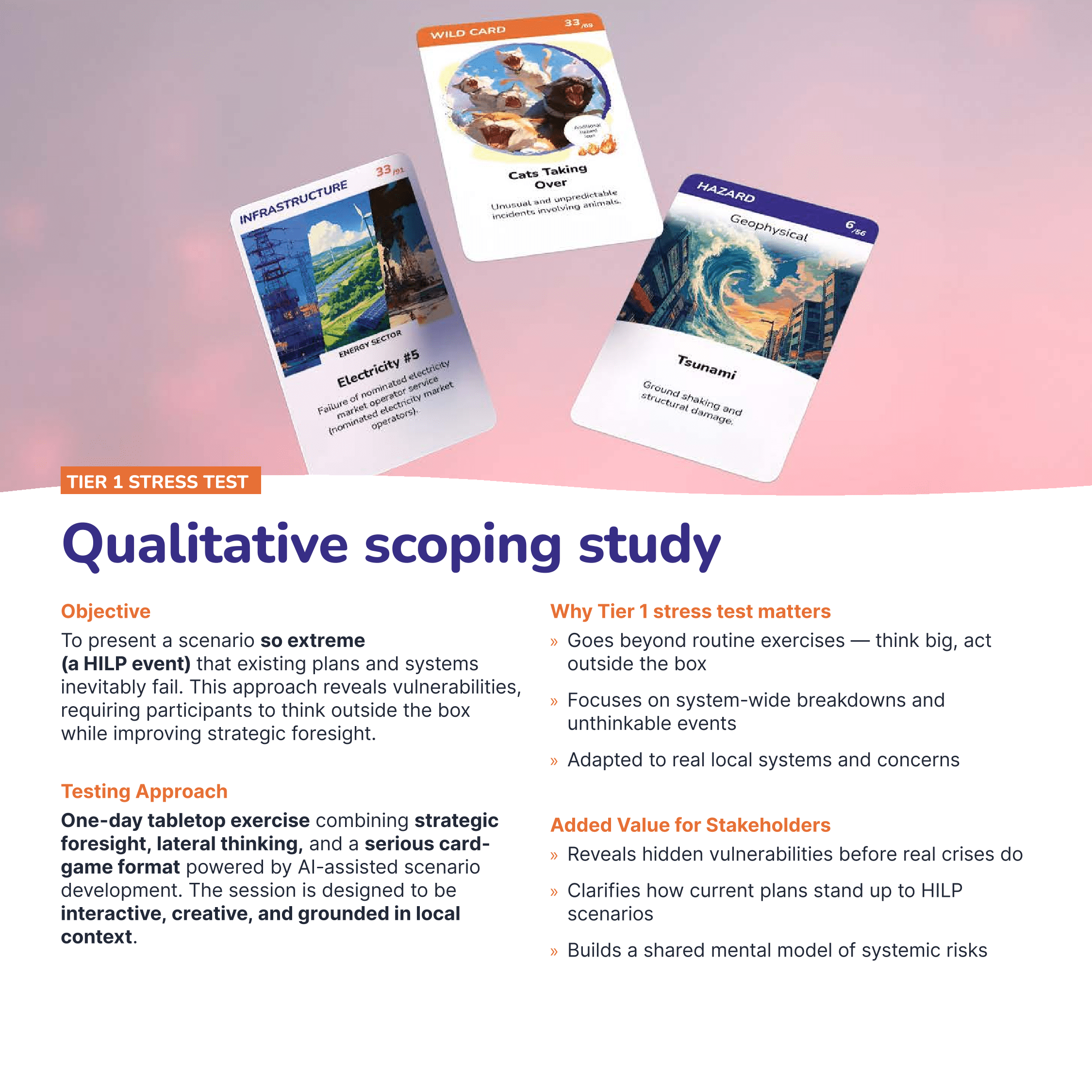
Qualitative scoping study

Testing Approach

  • Over ~9 months, stakeholders collaborate with researchers and modelers to develop a digital network model, applying innovative technologies such as network science, AI, and agent-based modelling. This model is then used to simulate HILP scenarios and evaluate the impact of different resilience strategies.

What Makes STT3 Unique?

  • Offers a digital model of your system to simulate disruptions
  • Captures real-time flows of information, resources, and energy
  • Enables testing of “what-if” scenarios before a crisis hits

Added Value for Stakeholders

  • Deep insights into system performance under stress
  • Improved preparedness through data-driven predictive modelling
  • Evidence-based support for resilience investments and long-term planning for HILP events